Hydrochloric Acid in Industry: Applications, Case Studies & Best Practices
April 17, 2026
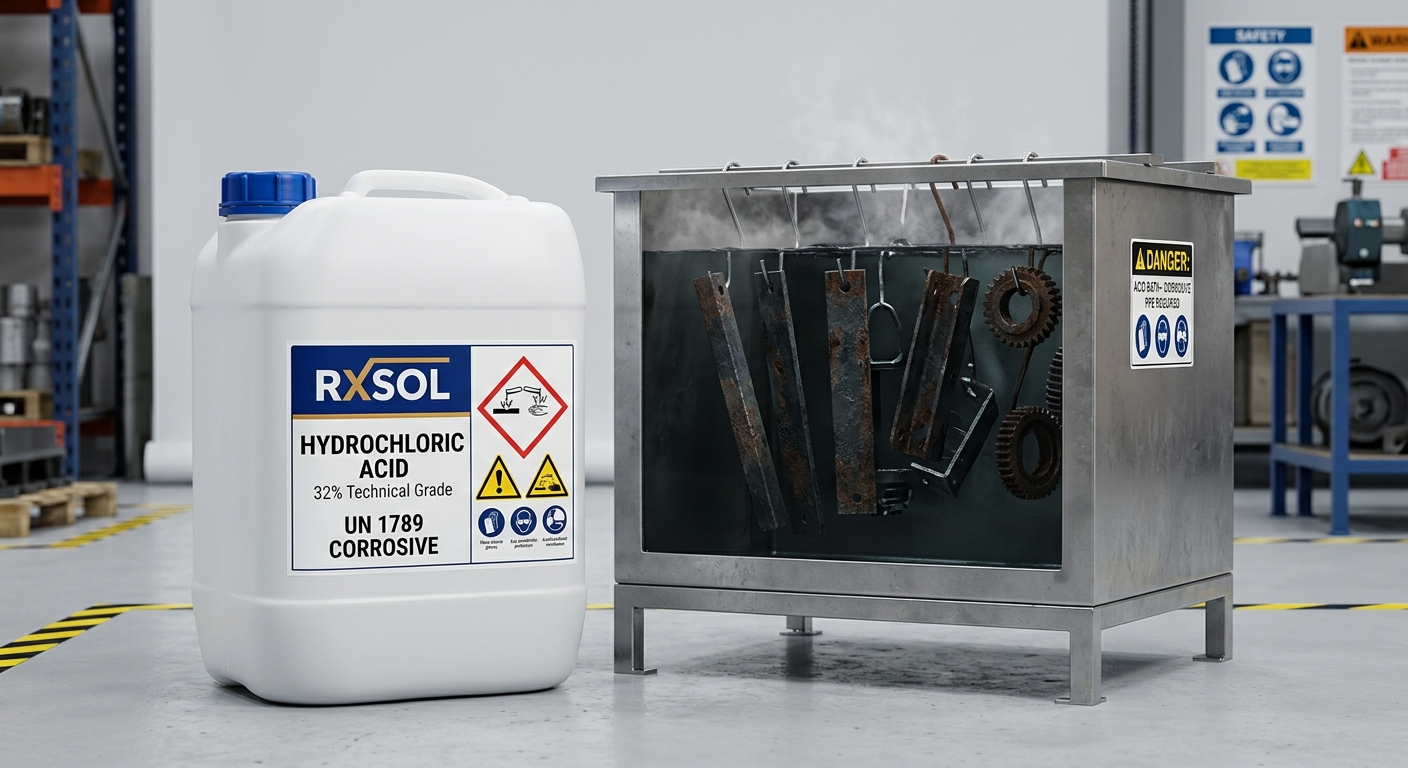
Hydrochloric acid is one of the most important process chemicals used in industrial cleaning, metal surface preparation, and water-related operations. In Sohar, where heavy industry, fabrication, utilities, and port-linked manufacturing all play major roles, hydrochloric acid metal pickling applications remain especially relevant for operations that need reliable oxide removal, surface activation, and controlled descaling.
For plant engineers and industrial managers, the value of hydrochloric acid lies in performance, availability, and versatility. For Sohar Chemicals customers, the bigger question is how to apply that performance safely and efficiently in real plant conditions. This article explains where hydrochloric acid fits in industry, how companies use it in practice, and which best practices make the biggest difference.
Why Hydrochloric Acid Is Widely Used in Industry
Hydrochloric acid is a strong acid with fast reaction characteristics against oxides, scale, alkaline contamination, and certain mineral deposits. That makes it highly useful in maintenance and production environments where surface cleanliness affects efficiency, coating quality, heat transfer, or product consistency.
Across manufacturing and heavy industry, companies use hydrochloric acid for:
- steel pickling and oxide removal
- descaling of process equipment
- resin regeneration in treatment systems
- pH control in selected applications
- cleaning of mineral deposits and process residues
- feedstock or process support in chemical manufacturing
For Sohar-based operations, hydrochloric acid manufacturing applications often center on maintenance, pretreatment, and equipment performance restoration.
Featured Application: Metal Pickling
One of the best known hydrochloric acid metal pickling applications is the cleaning of steel and fabricated metal surfaces before galvanizing, coating, welding, or further processing.
What metal pickling does
Metal pickling removes:
- rust
- mill scale
- oxide films
- heat treatment scale
- surface contamination that affects downstream finishing
A clean metal surface improves coating adhesion, reduces defects, and supports more consistent production quality.
Why hydrochloric acid is preferred
In many metal treatment environments, hydrochloric acid steel pickling is preferred because it reacts effectively at practical operating conditions and can remove heavy oxide layers efficiently. Facilities select the exact bath chemistry and operating controls based on steel type, contamination level, throughput, and downstream process needs.
In Sohar's fabrication and industrial treatment sectors, pickling remains a high-value use because surface preparation strongly affects coating life and finished product quality.
Application in Industrial Descaling
Another major use is hydrochloric acid industrial descaling. Deposits of calcium, rust, and process solids can reduce heat transfer, lower flow rates, and increase energy use. Hydrochloric acid is frequently chosen for controlled cleaning of:
- heat exchangers
- pipelines
- process vessels
- boilers and associated circuits in selected conditions
- utility systems with mineral buildup
Descaling projects typically require pre-job compatibility review, trial concentration checks, and careful rinsing after cleaning. When done well, the result is improved system efficiency and reduced unplanned downtime.
Other Manufacturing Applications
Beyond pickling and descaling, hydrochloric acid manufacturing applications include:
Water and treatment systems
Some treatment programs use hydrochloric acid for pH adjustment and resin regeneration.
Surface preparation before coating
Facilities preparing steel, fabricated parts, or industrial assemblies may use hydrochloric acid to remove oxides before painting or galvanizing.
Process cleaning during shutdowns
During maintenance turnarounds, hydrochloric acid may be used to remove hardened deposits from equipment where approved by technical procedure.
Chemical formulation and industrial processing
In some sectors, hydrochloric acid is also used as a process input or reaction aid under tightly controlled conditions.
Case Study 1: Steel Fabrication Line Performance Recovery
A fabrication operation handling structural steel components experienced inconsistent coating adhesion and visible surface defects after painting. Inspection showed persistent oxide layers and mill scale on incoming steel.
Challenge
- inconsistent paint finish
- higher rework rates
- poor adhesion in selected batches
Approach
The plant introduced a controlled pickling stage using hydrochloric acid with strict timing, rinsing, and inspection controls. Operators verified bath strength regularly and improved PPE and ventilation during handling.
Result
- cleaner metal surfaces before finishing
- reduced visible coating defects
- better process consistency
- improved throughput with less rework
This type of result explains why hydrochloric acid steel pickling continues to be important in industrial metal preparation.
Case Study 2: Heat Exchanger Descaling in a Process Plant
A process facility saw declining thermal performance in a heat exchanger network due to heavy mineral and oxide deposits.
Challenge
- reduced heat transfer efficiency
- longer production cycles
- higher energy cost
Approach
The maintenance team carried out a planned cleaning campaign using a hydrochloric acid-based descaling process designed for the equipment metallurgy and deposit profile. The work included controlled circulation, monitoring, flushing, and neutralization.
Result
- improved heat transfer
- more stable process temperatures
- lower maintenance disruption
- better equipment availability after cleaning
This is a common example of hydrochloric acid industrial descaling delivering strong operational value when engineering controls are applied properly.
Best Practices for Industrial Use
Performance alone is not enough. Strong hydrochloric acid process safety standards are essential.
1. Match the chemical to the metallurgy
Before use, confirm compatibility with the material of construction. Hydrochloric acid can be unsuitable for some metals and alloys.
2. Control concentration and contact time
Overconcentration or excessive dwell time can damage equipment or create unnecessary fume exposure.
3. Use proper transfer systems
Pumps, hoses, valves, and storage containers must be acid compatible and regularly inspected.
4. Enforce PPE and ventilation
Operators need acid-resistant gloves, splash protection, protective clothing, and adequate ventilation or respiratory controls where required by assessment.
5. Train operators on dilution and emergency response
Personnel should know the dilution order, spill response, and first-aid procedures before work begins.
6. Flush and neutralize correctly
Residual acid left in a system can continue reacting and create corrosion or safety issues for follow-on maintenance.
Process Safety Considerations
Good hydrochloric acid process safety depends on procedure, supervision, and engineering controls. Sites should implement:
- SDS access and task-specific SOPs
- pre-job risk assessments
- eyewash and emergency shower access
- bunded storage and spill control
- segregation from incompatible chemicals
- exposure control in enclosed areas
- waste disposal planning before the job starts
Industrial teams in Sohar often operate in high-throughput environments. That makes discipline even more important. Fast turnaround should never replace correct acid handling.
Choosing a Supplier for Sohar Operations
When companies look for a hydrochloric acid supplier Sohar industries can count on, they should evaluate more than price. Important selection criteria include:
- consistent concentration and quality
- packaging options suited to plant handling systems
- reliable lead time
- practical documentation and SDS support
- understanding of industrial applications
- responsiveness for repeat supply and shutdown planning
Sohar Chemicals works with industrial users that need dependable supply backed by application-aware support. That matters whether the job is routine maintenance, metal treatment, or a scheduled cleaning campaign.
Common Mistakes to Avoid
Industrial teams can reduce problems by avoiding these common mistakes:
- using hydrochloric acid without checking material compatibility
- running overly strong solutions without technical need
- ignoring fumes in partially enclosed work zones
- using poor rinsing practices after cleaning
- storing acid near incompatible materials
- treating the product as a commodity rather than a controlled process chemical
These mistakes can lead to equipment damage, lost maintenance time, and avoidable safety events.
Why Hydrochloric Acid Still Matters in Sohar Industry
Sohar remains a major industrial hub, with strong demand for chemicals used in fabrication, utilities, logistics-linked maintenance, and process support. In that environment, hydrochloric acid remains valuable because it solves practical operating problems, especially where deposit removal and metal preparation affect uptime and product quality.
Whether the application is pickling steel, restoring a fouled exchanger, or supporting a controlled cleaning job, the chemical delivers results when it is selected correctly and managed well.
Conclusion
Hydrochloric acid continues to be a core industrial chemical because it supports effective metal pickling, descaling, process cleaning, and treatment operations. For teams evaluating hydrochloric acid metal pickling applications or broader industrial use cases, the best results come from combining the right concentration, correct process controls, and strong safety discipline.
Sohar Chemicals helps industrial customers source hydrochloric acid for real operating needs, from fabrication and maintenance to process support. A dependable supplier, clear procedure, and strong engineering control make the difference between a risky acid job and a well-managed industrial solution.
For any inquiries, email us at support@omanchem.com or reach out to us on (WhatsApp) +968 77333599.
